Here’s a question nobody asks at the start of a diet article: why do so many people who know how to eat well still eat badly?
It’s not lack of information. Any Google search will tell you vegetables are good and chips are bad. Most adults know this by age ten.
So what’s the actual problem?
Environment, habits, and mental load. Not willpower. Not genetics. Those three things trip people up far more than a lack of knowledge. Here’s how to work with them instead of against them.
What Actually Works in 2026
These aren’t rules. They’re friction-reduction strategies — ways to make the healthy choice easier than the unhealthy one.
Cook more at home. This is the single most consistent predictor of a healthy diet in research studies. Restaurant food — even “healthy” restaurant food — tends to be higher in sodium, added sugars, and fat than what you’d make yourself. You don’t need to cook every meal. Two or three nights a week is enough to move the needle.
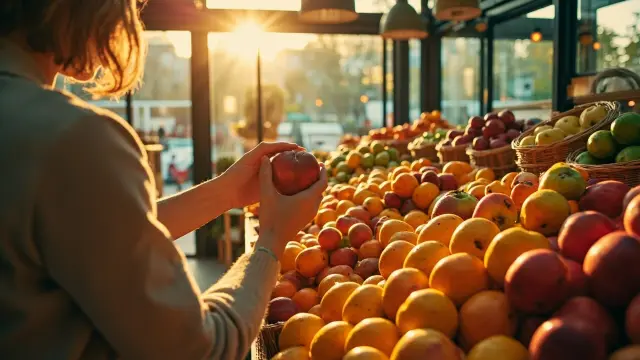
Put vegetables on your plate before anything else. Not as a side. As the foundation. Half the plate. The easiest way to do this: make the vegetable the star of at least one meal a day, and build around it.
Choose foods with fiber. Fiber is the reason plants fill you up. Meat, dairy, and processed foods have very little of it. Fruits, vegetables, beans, whole grains — those are where fiber lives. When you feel genuinely full, you eat less of everything else.
Snack with a plan. A handful of almonds. An apple with peanut butter. Greek yogurt with berries. Planned snacks prevent the 5pm “I’m starving and everything sounds good” moment when willpower is at its lowest.
Use a smaller plate. Research here is consistent: people serve and eat less food when using smaller bowls and plates — without feeling cheated. It’s the lowest-effort change on this list.
Drink water before meals. Not as a rule. But if you’re prone to eating too fast, a glass of water 15 minutes before a meal slows things down and gives your fullness signals time to catch up.
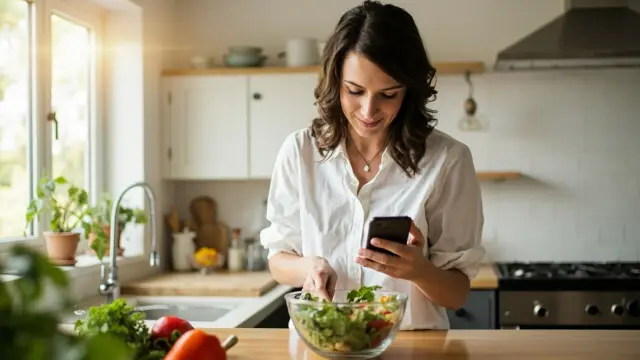
Eat without your phone. This sounds small. It’s not. Most people inhale food while scrolling, which means they finish eating without really tasting anything — and then feel hungry again an hour later. Eating without distraction is one of the simplest ways to actually enjoy your food and recognize when you’re full.
The “Habit Stacking” Trick That Actually Works
New habits stick better when you attach them to existing ones.
- After I pour my morning coffee, I eat a handful of nuts.
- Before I sit down for dinner, I put a serving of vegetables on my plate.
- After I finish brushing my teeth, I log what I ate today.
You don’t need a complicated system. You need one anchor and one new action. Once that sticks — usually 2–3 weeks — add another stack. This is how lasting change actually builds.
What About “Cheat Days”?
If you eat well 80% of the time, you don’t need a cheat day. You just need to eat well most of the time and not feel guilty about the rest. Guilt tends to lead to all-or-nothing thinking, which leads to giving up entirely. Moderation beats restriction in the long run.
Making It Stick
Nobody eats perfectly. The goal isn’t perfection — it’s making the healthy choice easier more often than not. A week where you cooked three dinners instead of ordering takeout every night is a win. A day where you traded chips for almonds is a win.
These aren’t dramatic changes. They’re small, repeatable ones. And small, repeatable wins are how healthy eating stops being something you “do” and starts being something you simply are.